
-
Filter By Category
- AC Power Cables | IEC Leads, Plugs & Sockets (482)
- 240V Extension Cords | Mains Power Extension Leads (45)
- 240V Mains Power Cables | AC Power Leads (10)
- 3 Pin Mains Power Cables | 240V AC Power Leads (17)
- C13 IEC Power Cables | C13 Power Leads (87)
- C14 IEC Power Cables | C14 Power Leads (35)
- C15 IEC Power Cables & Leads | High Temperature (6)
- C19 IEC Power Cables & Leads | 15A C19 Cables (10)
- C20 IEC Power Cables & Leads | 15A C20 Cables (9)
- C7 IEC Power Cables | Figure 8 Power Cables (22)
- IEC Lock Power Cables & Locking IEC Leads (23)
- IEC Plugs & Sockets | C7, C13, C14, C19 & C20 (19)
- IEC Power Cables | C5, C7, C13, C14, C7 & C19 (166)
- Rewireable Mains Plugs & Sockets | IEC Connectors (33)
- AC Power Components, IEC Plugs & Sockets | (15)
- IEC Chassis (3)
- IEC Line (12)
- Powerboards & Mains Adaptors (31)
- PDU Power Rails & Power Distribution Units (4)
- Powerboards | 4, 6 & 8 Way Power Boards | Aus Electronics Direct (11)
- RCD Powerboard & RCD Powerblock | Safety Powerboards (8)
- Surge Protected Powerboards | Surge Protection (8)
-
Filter By Stock
- In Stock (215)
Filter By Brand
- Aus Electronics Direct (273)
- HPM (2)
AC Power Cables, IEC Leads, Plugs & Sockets
Popular Products




AC Power Cables, IEC Leads, Plugs & Sockets
Shop AC power cables, IEC leads, mains power cords, plugs and sockets from Aus Electronics Direct. Our range includes Australian mains power cables, IEC equipment leads, extension cables, piggyback power cords, rewireable plugs and sockets, and specialised IEC cable configurations for compatible electrical and electronic equipment.
Choose from common IEC connector types including C5 cloverleaf, C7 figure-eight, C13, C14, C15, C19 and C20. Options are available in different cable lengths, current ratings, connector orientations and configurations, including right-angle IEC cables, IEC C13 to C14 extension leads and IEC-Lock locking power cables.
Our AC power cable range is suitable for a variety of compatible equipment and applications, including computers, monitors, appliances, rack equipment, power distribution equipment and electronic devices. Australian mains cords and extension cables are also available in different lengths and current ratings, including 10A and 15A options.
When choosing an AC power cable or IEC lead, check the connector type at both ends, required cable length, voltage and current rating, connector orientation and compatibility with the equipment. Some applications may also require specialised features such as locking IEC connectors, high-temperature connectors or specific 15A configurations.
Always check the individual product specifications before purchasing. Mains-voltage electrical products and installations should be used and installed in accordance with applicable Australian electrical safety requirements and manufacturer instructions.
What Is an IEC Power Cable?
An IEC power cable is an electrical power lead that uses a standardised IEC connector to supply mains power to compatible electrical or electronic equipment. IEC connectors are commonly used with computers, monitors, appliances, servers, networking equipment, power distribution equipment and other electronic devices.
Common IEC power cable configurations include C5, C7, C13, C14, C15, C19 and C20. These connector designations identify different appliance coupler configurations and are used to match the power connection on compatible equipment. The IEC 60320 standard covers appliance couplers for household and similar general-purpose applications.
For example, an IEC C13 power cable is commonly used to connect compatible equipment to a mains power source, while an IEC C13-to-C14 cable can be used to connect compatible IEC equipment or provide an extension between suitable C14 and C13 connections.
IEC power cables are available in different lengths, connector configurations, current ratings and designs. Some cables also feature right-angle connectors, locking IEC connectors or other specialised configurations for particular installation requirements.
When choosing an IEC power cable, check the connector type required by the equipment, the connector at the opposite end of the cable, cable length, current rating and any specific requirements such as a right-angle or locking connector. The IEC connector must be compatible with the equipment and intended electrical application.
Aus Electronics Direct offers a range of IEC power cables and leads, including C5 cloverleaf, C7 figure-eight, C13, C14, C15, C19 and C20 configurations.
Always check the individual product specifications and equipment requirements before purchasing an IEC power cable.
What Is an IEC C13 Cable?
An IEC C13 cable is a mains power cable fitted with an IEC C13 female connector at the equipment end. C13 connectors are commonly used with computers, monitors, servers, UPS systems, networking equipment, PDU power distribution units and other compatible electronic equipment.
The C13 connector is designed to connect to a compatible IEC C14 appliance inlet. Standard C13/C14 cables are commonly rated for applications up to 10A, depending on the specific cable and equipment specifications.
What Is an IEC C14 Cable?
An IEC C14 is the male appliance inlet commonly found on electrical and electronic equipment. It is designed to accept a compatible IEC C13 connector.
C14 inlets are commonly found on computers, monitors, servers, UPS units, PDUs and networking equipment. When people refer to an “IEC C14 cable”, they may be referring to a power cable that has a C14 connector on one end, such as a C14-to-C13 power lead.
What Is the Difference Between C13 and C14?
The main difference between C13 and C14 is their function and connector gender. C13 is the female cable connector, while C14 is the male appliance inlet fitted to compatible equipment.
A standard IEC C13 power cable plugs into an IEC C14 inlet. C13 and C14 form a commonly used IEC 60320 connector pair for powering computers, monitors, servers, networking equipment and other electronic devices.
What Is an IEC C5 Cable?
An IEC C5 cable is a power cable with a three-lobed connector commonly known as a cloverleaf or Mickey Mouse connector. The C5 connector is commonly used with compatible laptop power supplies, projectors and other compact electronic equipment.
IEC C5 connectors are designed to connect to C6 appliance inlets and are generally used for Class I equipment requiring an earth connection. The standard C5/C6 family is rated at up to 2.5A for typical IEC applications.
What Is an IEC C7 Figure-8 Cable?
An IEC C7 figure-8 cable is a two-conductor power cable with a distinctive figure-eight or infinity-shaped connector. It is commonly used with compatible radios, audio equipment, televisions, small electronics, media equipment and some power adapters.
The C7 connector mates with an IEC C8 appliance inlet. Unlike the three-conductor C13 connector, C7 is a two-conductor connector used with compatible Class II double-insulated equipment. The standard C7/C8 family is commonly rated at up to 2.5A.
What Is an IEC C19 Cable?
An IEC C19 cable is a heavy-duty IEC power cable fitted with a C19 female connector. C19 connectors are larger than C13 connectors and are designed for higher-current applications.
C19 connectors mate with IEC C20 appliance inlets and are commonly used with servers, high-power networking equipment, data-centre equipment, UPS systems and rack-mounted power distribution equipment. The IEC C19/C20 family is commonly rated at up to 16A under IEC applications.
What Is the Difference Between C19 and C20?
C19 is the female cable-side connector, while C20 is the corresponding male appliance inlet. A C19 power cable connects to a compatible C20 inlet on equipment.
C19/C20 connectors are physically larger than C13/C14 connectors and are intended for higher-current applications. They should not be treated as interchangeable with C13/C14 cables because the connector dimensions and electrical ratings are different.
What Is an IEC C15 Cable?
An IEC C15 cable is a heat-resistant IEC power cable designed for equipment operating at higher temperatures around the connector. C15 is similar in appearance to C13 but includes a different keying feature and is designed to mate with a C16 appliance inlet.
C15 connectors are commonly associated with equipment such as electric kettles and other appliances where the connector area may experience elevated temperatures. The IEC C15/C16 family is rated for 10A under standard IEC applications and is designed for higher operating temperatures than the standard C13/C14 family.
What Is an IEC-Lock Cable?
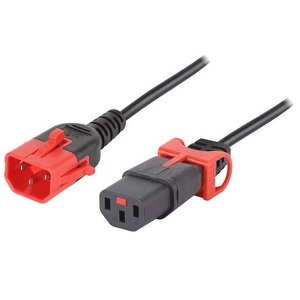
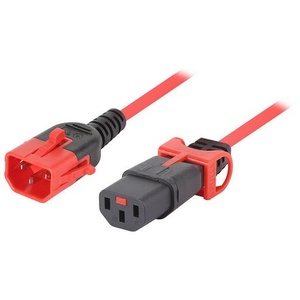
An IEC-Lock cable is a power cable with a locking IEC connector designed to help prevent accidental disconnection. A common configuration uses a locking C13 connector that secures into a standard C14 appliance inlet.
IEC-Lock cables can be useful for servers, networking equipment, UPS systems, PDUs and other equipment where an accidental loss of power could cause problems. Depending on the design, the locking mechanism can engage with a standard IEC inlet without requiring modifications to the equipment.
What Is a 10A IEC Cable?
A 10A IEC cable is an IEC power cable designed for an application with a rated current of up to 10A, subject to the specifications of the particular cable, connector and equipment.
Common 10A IEC configurations include C13/C14 and C15/C16 cables. A C13-to-C14 cable is widely used for computers, monitors, servers, UPS systems and other electronic equipment. Always check the cable's stated current and voltage ratings before use rather than assuming every IEC cable is rated at 10A.
What Is a 15A IEC Cable?
A 15A IEC cable is a cable specified for a 15A application, but the term should be checked carefully because IEC connector ratings vary by connector type, region and applicable standard.
For Australian applications, do not select an IEC cable based on the “15A” description alone. Check the exact connector type, cable rating, plug configuration, equipment requirements and applicable Australian standards. Some IEC connector families have different regional current ratings, so the product's stated specifications should always take priority.
How Do I Choose the Right IEC Power Cable?
Choose an IEC power cable by first identifying the connector required by your equipment. Check whether the equipment has a C14, C20, C8 or another IEC appliance inlet, then select the matching cable connector.
You should also check:
-
Connector type – such as C5, C7, C13, C15 or C19.
-
The connector at the other end – such as an Australian mains plug, C14 or C20.
-
Current and voltage rating – make sure the cable is suitable for the equipment.
-
Cable length – select a length that provides sufficient reach without unnecessary excess cable.
-
Connector orientation – consider straight or right-angle connectors where space is limited.
-
Locking requirements – IEC-Lock may be useful where accidental disconnection must be reduced.
-
Temperature requirements – use a suitable C15 cable where the application requires a hot-condition connector.
Always compare the cable specifications with the equipment manufacturer's requirements before purchasing.
Are IEC Cables Universal?
IEC cables are based on internationally standardised connector configurations, which makes many IEC power connections widely used across different countries and types of equipment. However, IEC cables are not universally interchangeable.
Different IEC connector types have different shapes, electrical ratings and applications. For example, C13 and C14 are a matched connector and inlet pair, while C19 and C20 are a larger higher-current pair. C5 and C7 are also different connector types and cannot simply be substituted for one another.
The mains plug on the other end of an IEC cable may also need to match the electrical system and plug standard of the country where the cable is being used.
What Length IEC Cable Do I Need?
Choose an IEC cable length that provides enough distance between the equipment and power source while avoiding unnecessary excess cable.
For rack and data-centre installations, shorter IEC cables can help with cable management, while longer cables may be appropriate where equipment is positioned further from a PDU or power source. Common IEC cable lengths include approximately 0.5m, 1m, 1.5m, 1.8m, 2m and 3m, although availability varies by cable configuration.
Measure the required cable route and allow enough length for the equipment to be positioned safely without putting tension on the connectors.
Can I Use a C13 Cable With a C14 Socket?
Yes. An IEC C13 cable is specifically designed to connect to a compatible IEC C14 appliance inlet.
C13 is the female cable connector and C14 is the corresponding male equipment inlet. This is one of the most common IEC power cable combinations and is widely used with computers, monitors, servers, networking equipment, UPS systems and PDUs.
However, make sure the cable's current, voltage, plug and equipment ratings are suitable for the intended application.
What Is a Right-Angle IEC Cable?
A right-angle IEC cable has an IEC connector that exits the cable at an angle rather than straight out from the equipment. This design can be useful where equipment is positioned close to a wall, rack rail, PDU or other obstruction.
Right-angle C13, C14, C19 and C20 configurations are available in different cable arrangements. They can help reduce cable protrusion and improve cable routing in restricted spaces, but the connector orientation must be selected to suit the equipment and installation.
