-
Filter By Stock
- In Stock (2)
Filter By Brand
- iduino (2)
Arduino Nano Starter Kit for Electronics Projects
Popular Products
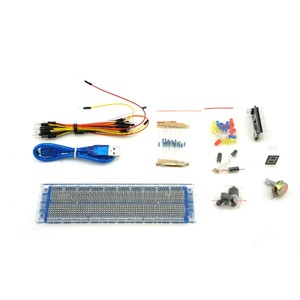
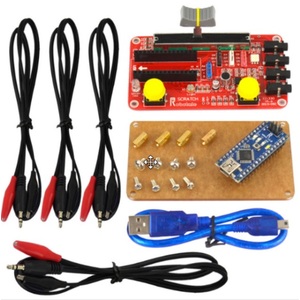
Arduino Nano Starter Kit for Electronics Projects
Arduino Nano Starter Kit for Electronics and Programming Projects
Get started with electronics, programming and DIY technology with the Arduino Nano Starter Kit. Designed for beginners, students, educators and electronics enthusiasts, this project kit provides an excellent introduction to microcontroller development and hands-on electronics experimentation.
Featuring a compact Arduino Nano development board and a selection of electronic components, the kit allows users to explore circuit building, sensor applications, LED control and basic programming.
Choose between the Nano Basic Starter Kit and Nano Scratch Starter Kit to suit your learning requirements and project interests.
What Can You Learn with an Arduino Nano Starter Kit?
The Arduino Nano Starter Kit provides an opportunity to develop practical electronics and programming skills through guided projects.
Learn how to:
-
Connect electronic components using a breadboard.
-
Program LEDs and control electronic outputs.
-
Read inputs from light, flame and tilt sensors.
-
Understand resistors, switches and potentiometers.
-
Work with seven-segment displays.
-
Generate sound using active and passive buzzers.
-
Write and upload basic Arduino programs.
Step-by-Step Arduino Learning Manual
Getting started with Arduino is easier with a comprehensive instruction manual. The supplied Nano Starter Kit manual covers component descriptions, programming fundamentals and practical exercises.
The manual includes projects involving serial output, pulse-width modulation, light sensors, flame sensors, tilt sensors, potentiometers, seven-segment displays, buzzers and buttons.
Aus Electronics Direct
Ideal for STEM Education and DIY Electronics
The Arduino Nano Starter Kit is suitable for:
-
Students learning electronics and programming.
-
Schools and educational institutions teaching STEM.
-
Beginners exploring microcontroller technology.
-
Hobbyists developing DIY electronics projects.
-
Makers experimenting with sensors and automation.
-
Users interested in learning basic robotics and electronic control systems.
FAQ
1. What is an Arduino Nano Starter Kit?
An Arduino Nano Starter Kit is an electronics learning kit designed to introduce users to programming, circuit building and microcontroller technology. It typically includes an Arduino Nano development board, electronic components, sensors, connecting wires and accessories for creating interactive projects and experimenting with electronics.
2. What is included in an Arduino Nano Starter Kit?
An Arduino Nano Starter Kit typically includes an Arduino Nano board, breadboard, jumper wires, LEDs, resistors, buttons, buzzers, sensors and other electronic components. Depending on the kit, additional items may include displays, potentiometers and an instruction manual. Check the individual product specifications for a complete list of included components.
3. What projects can you build with an Arduino Nano Starter Kit?
You can build a variety of beginner electronics projects, including LED lighting circuits, sound alarms, light-sensitive devices, temperature monitoring systems, sensor-controlled applications and digital displays. More advanced projects can include automated systems, small robots and interactive electronic devices.
4. Is the Arduino Nano suitable for beginners?
Yes. The Arduino Nano is suitable for beginners who want to learn electronics and programming. Its compatibility with the Arduino IDE, compact design and extensive online learning resources make it a practical platform for experimenting with circuits, sensors and basic microcontroller applications.
5. What is the difference between Arduino Nano and Arduino Uno?
The main differences are their size, physical layout and connectivity. Both commonly use the ATmega328P microcontroller in their classic versions and offer similar processing capabilities. The Arduino Nano is smaller and designed for compact projects and breadboard installation, while the Arduino Uno has a larger board layout that is easier to handle when learning electronics and connecting components.
6. What programming language does Arduino Nano use?
The Arduino Nano is programmed using the Arduino programming language, which is based on C and C++. Users can write, compile and upload programs through the Arduino IDE. These programs can control LEDs, read sensor data, operate electronic components and automate different tasks.
7. How do I connect an Arduino Nano to a computer?
Connect the Arduino Nano to your computer using a compatible USB cable. Open the Arduino IDE, select the appropriate Arduino Nano board and processor configuration, and choose the correct communication port. You can then write or upload a program to the board. Some Nano versions may require a USB-to-serial driver depending on their USB interface.
8. Can Arduino Nano work with sensors and electronic components?
Yes. The Arduino Nano can connect to a wide range of electronic components and sensors through its digital and analogue input/output pins. Compatible devices include light sensors, temperature sensors, tilt sensors, buttons, LEDs, buzzers and displays. Additional modules can also be connected using communication protocols such as I2C and SPI.
9. Does the Arduino Nano Starter Kit include an instruction manual?
Some Arduino Nano Starter Kits include an instruction manual with component descriptions, circuit diagrams, programming examples and step-by-step project tutorials. These resources help beginners understand how to connect electronic components, write programs and complete practical electronics exercises. Check the product specifications to confirm the manual included with your selected kit.
10. What is the difference between the Nano Basic and Nano Scratch Starter Kit?
The Nano Basic Starter Kit focuses on learning electronics and Arduino programming through individual components, sensors and practical circuit-building exercises. The Nano Scratch Starter Kit provides an alternative learning approach incorporating Scratch-based programming activities, depending on its supplied software and components. Both kits are designed to introduce users to Arduino Nano development, but their included accessories and learning activities may differ.
11. Can Arduino Nano be used for robotics projects?
Yes. The Arduino Nano can be used for small robotics projects, including obstacle-avoiding robots, sensor-controlled vehicles and automated devices. It can interface with sensors, servo motors and motor driver modules to control movement and respond to environmental inputs. Motors generally require suitable driver circuits and an appropriate external power supply.
12. Is Arduino Nano suitable for STEM education?
Yes. The Arduino Nano is an excellent learning platform for STEM education because it combines science, technology, engineering and mathematics through practical activities. Students can develop programming skills, understand electronic circuits, experiment with sensors and explore automation while building interactive projects. Its compact size also makes it suitable for classroom demonstrations and hands-on learning exercises.