Filter By Colour
- Red
- blue
- Black
-
Filter By Stock
- In Stock (3)
Filter By Brand
- Aus Electronics Direct (1)
ABS Filament
Popular Products
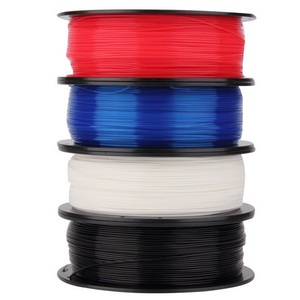
ABS Filament for 3D Printers
Shop ABS filament at Aus Electronics Direct for your 3D printing projects. ABS (Acrylonitrile Butadiene Styrene) is a durable thermoplastic valued for its impact resistance, strength and ability to withstand higher temperatures than many common 3D printing materials.
ABS 3D printer filament is suitable for producing functional components, protective enclosures, brackets, prototypes and other parts that require durability. Our range includes 1.75mm ABS filament options in popular colours and spool sizes to suit different printing requirements.
Whether you're creating practical replacement parts, custom components or engineering prototypes, choosing the right ABS filament can help you achieve reliable results. Check your 3D printer's filament diameter compatibility and recommended printing temperatures before purchasing.
What Is ABS Filament?
ABS filament is a thermoplastic material commonly used in FDM (Fused Deposition Modelling) 3D printing. Known for its toughness, impact resistance and heat resistance, it is often selected for parts that need to withstand regular handling or mechanical stress.
Compared with PLA, ABS generally offers better heat resistance and durability, although it can be more challenging to print. It typically requires a heated print bed and benefits from an enclosed printing environment to help reduce warping and uneven cooling.
Benefits of ABS 3D Printer Filament
ABS filament offers several advantages for functional and practical 3D printing applications:
-
Impact resistance: Suitable for parts that may experience knocks, vibration or repeated handling.
-
Heat resistance: Can withstand higher temperatures than standard PLA, depending on the formulation.
-
Durability: Useful for functional components and protective housings.
-
Post-processing: Can be sanded and, with appropriate precautions, smoothed using acetone.
-
Versatility: Suitable for prototypes, brackets, enclosures and custom mechanical components.
ABS vs PLA Filament: What Is the Difference?
ABS and PLA are two popular materials used in FDM 3D printing, but they have different characteristics.
|
Feature |
ABS filament |
PLA filament |
|---|---|---|
|
Strength and toughness |
Generally tougher and more impact-resistant |
Often more rigid but can be brittle |
|
Heat resistance |
Generally higher |
Generally lower |
|
Printing difficulty |
More challenging |
Easier for beginners |
|
Heated bed |
Recommended |
Often optional, depending on printer |
|
Warping |
More prone to warping |
Generally less prone |
|
Common applications |
Functional parts, enclosures and prototypes |
Models, decorative items and general-purpose prints |
Choose ABS when durability and heat resistance are important. PLA is often a better starting point for beginners or projects where ease of printing is the priority.
What Temperature Should ABS Filament Be Printed At?
ABS filament commonly uses a nozzle temperature in the approximate range of 220–260°C and a heated bed around 80–110°C. However, recommended settings vary by filament manufacturer, formulation and printer.
For best results:
-
Follow the temperature recommendations on the filament packaging or product listing.
-
Use a heated print bed with suitable surface adhesion.
-
Consider an enclosed printer to maintain a more consistent printing temperature.
-
Minimise drafts and rapid cooling to help reduce warping.
-
Ensure adequate ventilation, as ABS printing can release fumes.
Always use the manufacturer's recommended settings for the specific filament being printed.
FAQ
What is ABS filament used for?
ABS filament is used to create durable 3D printed components, including protective enclosures, brackets, mechanical parts, prototypes and functional household items. Its impact resistance and heat resistance make it suitable for applications where standard PLA may not provide the required performance.
Is ABS filament stronger than PLA?
ABS is generally tougher and more impact-resistant than standard PLA, while PLA is often more rigid and easier to print. The best choice depends on the intended application, required heat resistance and printing conditions.
What size ABS filament do I need?
The filament diameter must match your 3D printer's specifications. Many FDM 3D printers use 1.75mm filament, while some machines require a different diameter. Check your printer's documentation before purchasing.
Does ABS filament require a heated bed?
Yes, a heated bed is generally recommended when printing with ABS. A heated build surface helps improve first-layer adhesion and reduce warping as the printed material cools.
Can ABS filament be used in any 3D printer?
No. Your printer must support the filament diameter and the higher nozzle and bed temperatures required for ABS. An enclosed printing environment is also beneficial, particularly for larger prints.
Is ABS filament suitable for beginners?
ABS can be more challenging for beginners because it is more prone to warping and requires higher printing temperatures than PLA. Beginners may find PLA easier to work with before moving on to ABS.
What colours does ABS filament come in?
ABS filament is available in different colours, depending on the manufacturer and product range. Check the available product options for current colour choices.
Can ABS filament be used for outdoor 3D printing projects?
ABS can be used for some outdoor applications, but it has limited UV resistance and may degrade with prolonged exposure to sunlight. For parts requiring better outdoor weather and UV resistance, consider ASA filament.
How should ABS filament be stored?
Store ABS filament in a sealed bag or airtight container with a desiccant in a cool, dry location. Keeping filament protected from moisture helps maintain consistent printing performance.
Does ABS filament produce fumes when printing?
Yes. ABS printing can release fumes and volatile compounds, including styrene. Print in a well-ventilated area and follow the printer and filament manufacturer's safety recommendations.