
-
Filter By Stock
- In Stock (9)
Filter By Brand
- Aus Electronics Direct (15)
PDU Power Rails & Power Distribution Units
Popular Products


PDU Power Rails & Power Distribution Units
PDU power rails and power distribution units (PDUs) provide a convenient way to distribute mains power to multiple devices and equipment from a central power connection. They are commonly used in server racks, equipment cabinets, data centres, workshops, commercial installations and other applications where multiple powered devices need to be connected in an organised manner.
Our range includes horizontal and vertical PDU power rails, rack-mounted PDUs, IEC outlet PDUs and power rails with Australian GPO sockets. Options include C13, C14, C19 and C20 IEC connections, as well as models designed for 10A, 15A and higher-current applications.
When choosing a PDU, consider the number and type of outlets, mounting orientation, input connection, current rating and the equipment you need to power. Horizontal PDUs can be suited to rack and equipment installations where horizontal mounting is preferred, while vertical PDUs can provide a greater number of outlets along the side of a rack or cabinet.
Check the specifications of each PDU carefully to ensure the voltage, current rating, connectors and mounting configuration are suitable for your application.
PDU Power Rail FAQs
1. What is a PDU power rail?
A PDU power rail is a power distribution unit designed to distribute mains electricity to multiple devices from a single power connection. PDU power rails are commonly used in server racks, equipment cabinets, data centres, UPS systems and professional installations. Depending on the model, they can provide IEC or Australian GPO outlets in horizontal or vertical configurations.
2. What does PDU stand for?
PDU stands for Power Distribution Unit. A PDU distributes electrical power from one input connection to multiple output sockets, allowing several pieces of equipment to be powered from a central unit. PDU models can vary in outlet type, number of outlets, current rating, mounting configuration and protection features.
3. What is a power distribution unit used for?
A power distribution unit is used to provide power to multiple pieces of electrical or electronic equipment from a central power connection. PDUs are commonly used in server racks, network cabinets, equipment racks, UPS installations, workshops and commercial environments. Depending on the application, a PDU may provide IEC outlets, GPO outlets, circuit protection, surge protection or other features.
4. What is the difference between a PDU and a powerboard?
A PDU and a powerboard both distribute electrical power to multiple outlets, but they are generally designed for different applications. Standard powerboards are commonly used for household, office and general-purpose equipment, while PDUs are often designed for professional equipment racks, server cabinets and other power distribution applications. PDUs may also provide specialised IEC connections, rack mounting, higher outlet counts and specific current or circuit protection features.
5. What is the difference between a horizontal and vertical PDU?
The main difference is the mounting orientation. A horizontal PDU is designed to mount horizontally, often occupying rack space such as 1RU. A vertical PDU is designed to mount vertically along the side or rear of a rack or cabinet and can provide multiple outlets without using conventional horizontal rack space. Choose the configuration that best suits your rack layout and available installation space.
6. What is an IEC PDU?
An IEC PDU is a power distribution unit that uses IEC-standard power connectors rather than, or in addition to, Australian GPO outlets. Common IEC configurations include C13, C14, C19 and C20 connections. IEC PDUs are widely used with computers, servers, networking equipment, UPS systems and other professional electronic equipment. The correct connector depends on the input and output requirements of the equipment being connected.
7. What is the difference between C13 and C14?
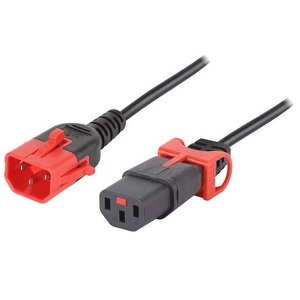
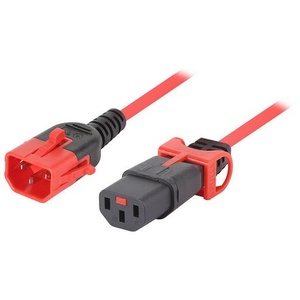
C13 and C14 are different IEC power connector types that are commonly used together. A C13 is typically the female appliance connector found on a power cable that connects to equipment, while a C14 is the male appliance inlet commonly found on equipment or used as an input connection on a PDU. For example, a PDU with C13 outlets can connect to equipment using cables with C14 plugs.
Aus Electronics Direct also offers PDU configurations with C13 outlets and C14 inputs, including 10-outlet vertical and horizontal models.
8. What is the difference between C19 and C20?
C19 and C20 are larger IEC connector types designed for higher-current applications than the commonly used C13/C14 combination. A C19 is typically used as an equipment-side connector, while C20 is commonly used as an equipment or PDU input connection. Always check the current rating and connector requirements of your equipment before selecting a C19 or C20 PDU.
Some Aus Electronics Direct PDUs combine C13 and C19 outlets with a C20 input, providing different IEC outlet options from a single power distribution unit.
9. What is a rack-mounted PDU?
A rack-mounted PDU is a power distribution unit designed to be installed in or alongside an equipment rack or cabinet. Rack-mounted PDUs provide a central location for distributing power to servers, networking equipment, UPS systems and other rack-mounted devices. Depending on the model, a rack PDU may mount horizontally within the rack or vertically along the rack frame.
10. Are PDU power rails suitable for server racks?
Yes. Many PDU power rails are specifically designed for rack and equipment applications. For example, the range includes horizontal 1RU PDUs and vertical rack-mount PDU models with IEC outlets, as well as models with GPO sockets. Horizontal models can be installed within rack space, while vertical models can provide power along the side of a rack without occupying conventional horizontal rack units.
Before installation, check the PDU's dimensions, mounting arrangement, input connector, outlet configuration, current rating and compatibility with the rack and connected equipment.
11. Are PDU power rails available with surge protection?
Yes. Selected PDU power rails include surge protection. For example, the current range includes a 15-outlet 10A GPO vertical PDU with surge protection, as well as rack-mounted surge-protected power distribution products.
Surge protection is not included with every PDU, so check the individual product specifications before purchasing if surge protection is required for your application.
12. How do I choose the right PDU for my equipment?
Choose a PDU based on the equipment you need to power and the available installation space. Consider the number of outlets, outlet type, input connector, current rating, mounting orientation and required protection features.
For rack equipment, check whether a horizontal or vertical PDU is more suitable. For servers and networking equipment, check whether C13, C14, C19 or C20 connections are required. For Australian equipment with standard mains plugs, a GPO PDU may be more appropriate. Also confirm the PDU's maximum current and voltage ratings before connecting equipment.
For higher-current applications, check the complete electrical specifications carefully. Some products in the range are available with 15A or 32A configurations, including a 32A IEC 60309 PDU with 10A and 15A GPO outputs.
