
-
Filter By Stock
- In Stock (4)
Filter By Brand
- Aus Electronics Direct (8)
Solar Battery Chargers – 12V Solar Chargers & Trickle Chargers
Popular Products
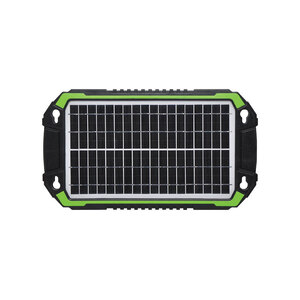
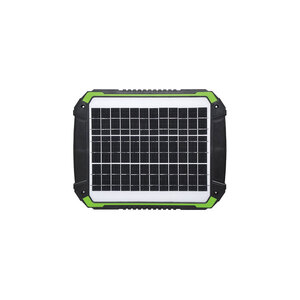
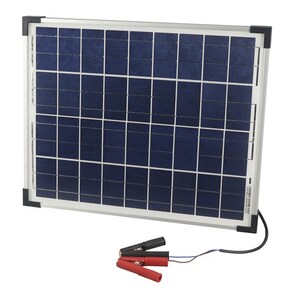
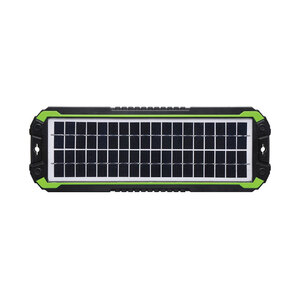
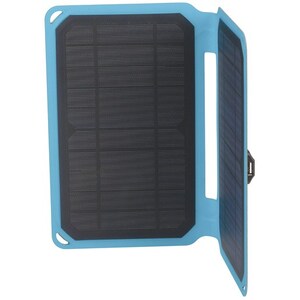
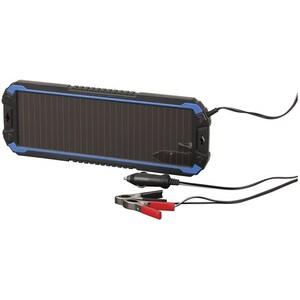
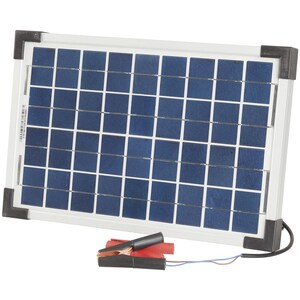

Solar Battery Chargers – 12V Solar Chargers & Trickle Chargers
Shop solar battery chargers at Aus Electronics Direct. Our range includes 12V solar battery chargers, portable solar chargers and solar trickle chargers designed for automotive batteries, caravans, boats, camping equipment and other battery-powered applications.
A solar battery charger uses energy from sunlight to generate electricity for charging or maintaining compatible rechargeable batteries. Available in different power outputs, solar battery chargers provide a convenient way to maintain battery charge when mains electricity is unavailable or when vehicles and equipment are stored for extended periods.
Our range includes 5W, 10W, 15W and 20W solar battery chargers, along with portable solar USB chargers and solar panels supplied with alligator clips for convenient battery connections.
12V Solar Battery Chargers
12V solar battery chargers are commonly used for maintaining and charging compatible 12V batteries found in cars, caravans, boats, motorcycles and recreational vehicles. They convert sunlight into DC electricity that can be supplied to a battery through an appropriate charging circuit or solar charge controller.
When choosing a 12V solar battery charger, consider the battery capacity, required charging current, available sunlight and intended application.
Solar Trickle Chargers and Battery Maintainers
Solar trickle chargers are designed to provide a relatively low charging current to help maintain a battery's charge over time. They can be useful for vehicles, boats, trailers and other equipment that may remain unused for extended periods.
A suitable solar battery maintainer can help compensate for natural battery self-discharge, provided the panel receives sufficient sunlight and the charging system is compatible with the battery.
Choosing the Right Solar Battery Charger
The correct solar battery charger depends on the battery voltage, capacity and charging requirements.
Consider the following factors before purchasing:
-
Wattage: Higher-wattage solar chargers can generally provide more charging power under equivalent sunlight conditions.
-
Battery voltage: Ensure the charger is designed for your battery's nominal voltage, such as 12V.
-
Battery compatibility: Check that the charger supports your battery chemistry, including lead-acid, AGM or lithium batteries where applicable.
-
Connection type: Choose suitable connections, such as alligator clips, battery terminals or compatible charging connectors.
-
Charging regulation: Check whether the product includes a built-in charge controller or requires an external controller
-
Application: Consider whether you need a charger for regular battery charging, long-term battery maintenance, camping or portable power.
Explore our range of solar battery chargers at Aus Electronics Direct for convenient solar-powered battery charging and maintenance solutions.
FAQ
1. What is a solar battery charger and how does it work?
A solar battery charger is a device that uses energy from sunlight to generate electricity for charging rechargeable batteries. It typically consists of a solar panel that converts sunlight into direct current (DC) electricity, which is then supplied to a battery through a suitable charging circuit or solar charge controller.
Solar battery chargers are available in different wattages and configurations to suit various applications, including automotive batteries, caravans, boats, camping equipment and off-grid power systems.
Depending on the design, a solar battery charger may include built-in charging regulation, battery connection cables or alligator clips for convenient connection to compatible batteries.
2. What is a 12V solar battery charger?
A 12V solar battery charger is designed to charge or maintain compatible 12V rechargeable batteries using electricity generated by sunlight.
These chargers are commonly used with automotive batteries, caravans, boats, motorcycles and recreational vehicles. They typically include a solar panel that generates DC electricity at a voltage suitable for charging a 12V battery when used with the appropriate charging regulation.
A 12V solar battery charger is a convenient option for maintaining batteries in vehicles and equipment that are stored or used in locations without convenient access to mains electricity.
Always check the charger's output voltage, current rating and battery compatibility before connecting it.
3. What is the difference between a solar battery charger and a solar trickle charger?
The main difference is the amount of charging current supplied and the intended charging application.
A solar battery charger can be designed to recharge batteries at different charging rates depending on its wattage and charging circuitry. Higher-output solar chargers can provide more charging current for batteries with greater capacity.
A solar trickle charger generally supplies a relatively low charging current to help maintain a battery's charge over an extended period. It is commonly used for vehicles, boats and equipment that are not used regularly.
Both types use solar energy, but the appropriate option depends on battery capacity, charging requirements and how frequently the battery is used.
4. Can a solar battery charger charge a completely flat battery?
A solar battery charger may be able to recharge a discharged battery, but its suitability depends on the battery's condition, the charger output and the battery management or charging circuitry.
If a battery is deeply discharged, it may require a specialised recovery or pre-charge process before normal charging can begin. Some solar charge controllers will not recognise batteries that have fallen below their minimum operating voltage.
A damaged, defective or excessively discharged battery may not be recoverable using a standard solar battery charger.
Before attempting to recharge a completely flat battery, check the battery manufacturer's recommendations and ensure the charger supports the battery's chemistry and charging requirements.
5. How long does it take to charge a 12V battery with a solar panel?
The time required to charge a 12V battery using a solar panel depends on the battery capacity, solar panel wattage, sunlight conditions, charging efficiency and the battery's existing charge level.
As a simplified example, consider a 12V 50Ah battery with approximately 50% of its capacity needing to be restored.
|
Solar panel |
Approximate charging power |
|---|---|
|
20W |
20 watts |
|
50W |
50 watts |
|
100W |
100 watts |
|
200W |
200 watts |
A 100W solar panel operating at an effective 5 peak-sun-hours per day could theoretically generate approximately 500Wh of energy per day under suitable conditions.
Actual charging time will be longer than ideal calculations suggest because of conversion losses, temperature, panel positioning, shading and battery charging characteristics.
For accurate sizing, consider both the battery capacity in amp-hours (Ah) and the usable solar energy available each day.
6. What size solar panel do I need to charge a 12V car battery?
The appropriate solar panel size depends on the car battery capacity, how discharged the battery is and whether you want to recharge it or simply maintain its charge.
As a general guide:
-
5W–10W: Suitable for some small battery maintenance applications, subject to the battery and controller requirements.
-
10W–20W: Useful for maintaining compatible automotive batteries during periods of storage.
-
20W–50W: Provides greater charging capacity for small to medium battery charging applications.
-
50W–100W: Suitable for more substantial charging requirements under favourable sunlight conditions.
-
100W or higher: Can provide greater charging capacity for larger batteries and higher energy demands.
For regular battery charging, choose a panel and charge controller that are compatible with the battery's voltage, chemistry and charging specifications.
Remember that a larger solar panel does not automatically mean faster charging in every situation. The charge controller and battery must also be capable of accepting the available charging current.
7. Can I leave a solar battery charger connected all the time?
A solar battery charger can often remain connected for extended periods, particularly when it is designed for battery maintenance and includes suitable charging regulation.
However, this depends on the charger's design and whether it supports the battery chemistry being used.
A solar battery charger with an appropriate charge controller can regulate charging voltage and current to help prevent overcharging. Some models also include reverse-current protection to prevent the battery from discharging through the solar panel at night.
Before leaving a solar charger connected continuously, check that:
-
The charger supports your battery voltage and chemistry.
-
The charging voltage is compatible with the battery manufacturer's specifications.
-
Overcharge protection or appropriate charge regulation is provided.
-
The charger is suitable for continuous operation.
-
All electrical connections are secure and protected from moisture.
Unregulated solar panels should not be left connected directly to batteries without checking the manufacturer's instructions.
8. Do solar battery chargers work on cloudy days?
Yes. Solar battery chargers can still generate electricity on cloudy days because solar panels can convert diffuse sunlight into electrical energy.
However, their output is generally reduced because clouds block or scatter some of the sunlight reaching the photovoltaic cells.
The amount of electricity generated depends on cloud coverage, panel efficiency, orientation and surrounding environmental conditions.
During heavily overcast weather, a small solar battery charger may produce insufficient power to maintain or recharge a battery effectively.
For applications requiring consistent battery charging, consider using a solar panel with sufficient wattage and a battery with adequate storage capacity.
9. Can I use a solar battery charger for a caravan or boat?
Yes. Solar battery chargers are commonly used for caravans, boats and other recreational vehicles to maintain or recharge compatible batteries.
For caravans, solar chargers can help maintain 12V batteries used for lighting, portable refrigerators, water pumps and other electrical equipment.
For boats, solar battery chargers can help maintain batteries used for starting engines, navigation equipment and onboard electrical accessories.
When choosing a solar battery charger for marine or caravan applications, consider:
-
Battery voltage and capacity.
-
Daily electricity consumption.
-
Solar panel wattage.
-
Battery chemistry and charging requirements.
-
Weather resistance and environmental protection.
-
Cable length and connector compatibility.
-
Whether a separate solar charge controller is required.
For larger caravan and marine electrical systems, a properly sized solar panel and charge controller may be more suitable than a small solar trickle charger.
10. Do I need a charge controller for a solar battery charger?
A solar charge controller is generally required when connecting a conventional solar panel to a rechargeable battery system.
It regulates the voltage and current supplied by the solar panel to help ensure the battery receives an appropriate charging profile.
There are two common types:
-
PWM (Pulse Width Modulation): A relatively simple and economical charging controller suitable for many smaller solar battery systems.
-
MPPT (Maximum Power Point Tracking): A more advanced controller that adjusts its operating conditions to maximise the available power from the solar panel.
Some solar battery chargers include an integrated charge controller, while others require an external controller.
Always check the product specifications before purchasing. The correct setup depends on the panel output, battery voltage, battery chemistry and charging requirements.
11. Can a solar battery charger charge an AGM or lithium battery?
Yes, some solar battery chargers can charge AGM and lithium batteries, but the charger must specifically support the battery's chemistry and charging requirements.
AGM batteries: Absorbent Glass Mat batteries are a type of sealed lead-acid battery. They require an appropriate charging voltage and charging profile to prevent overcharging and premature battery deterioration.
Lithium batteries: Lithium batteries, including LiFePO4 batteries, require compatible charging profiles and appropriate voltage limits. Many lithium batteries also incorporate a Battery Management System (BMS) to provide protection against conditions such as overcharging and excessive discharge.
Not every solar battery charger supports both AGM and lithium batteries. Check the manufacturer's specifications before connecting a charger to either battery type.
12. What is the difference between a solar battery charger and a battery maintainer?
A solar battery charger and a battery maintainer both help keep rechargeable batteries supplied with electrical energy, but they have slightly different purposes.
A solar battery charger uses photovoltaic cells to convert sunlight into electricity for charging a battery. Depending on its wattage and charging capabilities, it can be used for battery maintenance or more substantial battery charging.
A battery maintainer is designed to keep a battery at an appropriate state of charge over an extended period. It typically monitors or regulates charging to compensate for natural battery self-discharge.
Some solar battery chargers are also designed to function as battery maintainers, making them useful for vehicles, boats, caravans and equipment that may remain unused for weeks or months.
The best option depends on whether you need to recharge a discharged battery or simply maintain an existing charge.